Welcome back! It's time to get something published. It has been 10-years since my last article as published.
So, what kind of article would you like to read?
Your ideas matter here! Please leave a comment.
13 June 2007


11 June 2007
Board Member Terms and Term Limits
Welcome back!
An excellent question about terms and term limits for board members.
A quick survey of some of my client’s bylaws show that most boards have a term of 3 years; most limit the number of terms allowable to two or three. One group recently eliminated the term limit after investing heavily in board development and training. The justification was that if a board member is well equipped, serving well, and willing to continue, they wanted to continue taking advantage of their important volunteer resource.
There is a clear advantage for an organization to have trained, experienced and well disciplined board members. A second and third term for members may allow the organization to enjoy just such board members.
A healthy, growing organization will likely have a strategic initiative to constantly renew and find new linkages within the community. One tactic to accomplish this important goal may be to find new board members who rotate onto the board to provide those new connections and new perspectives.
Boards should carefully consider the advantages and disadvantages caused by its limits to member terms and term limits.
Related to this is board evaluation and discipline of itself.
Board terms and term limits are sometimes suggested as a way to remove ineffective or antagonistic board members. While this may in fact happen. It is not a good strategy to enforce board discipline. The board chairperson and the board as a whole are responsible to evaluate the job outputs of the board and the effectiveness of individual board members. Those board members who are not willing to perform with the discipline and rigor required by the boards own explicit board process policy should be invited to resign.
Further, this task has sometimes gone to the executive director (CEO) when the board has failed to live up to this important responsibility. A well-designed board level policy will assign the task of evaluating the board and holding it accountable to the board.
Feel free to comment with your perspective or questions.
Your ideas matter here! Please leave a comment.
An excellent question about terms and term limits for board members.
A quick survey of some of my client’s bylaws show that most boards have a term of 3 years; most limit the number of terms allowable to two or three. One group recently eliminated the term limit after investing heavily in board development and training. The justification was that if a board member is well equipped, serving well, and willing to continue, they wanted to continue taking advantage of their important volunteer resource.
There is a clear advantage for an organization to have trained, experienced and well disciplined board members. A second and third term for members may allow the organization to enjoy just such board members.
A healthy, growing organization will likely have a strategic initiative to constantly renew and find new linkages within the community. One tactic to accomplish this important goal may be to find new board members who rotate onto the board to provide those new connections and new perspectives.
Boards should carefully consider the advantages and disadvantages caused by its limits to member terms and term limits.
Related to this is board evaluation and discipline of itself.
Board terms and term limits are sometimes suggested as a way to remove ineffective or antagonistic board members. While this may in fact happen. It is not a good strategy to enforce board discipline. The board chairperson and the board as a whole are responsible to evaluate the job outputs of the board and the effectiveness of individual board members. Those board members who are not willing to perform with the discipline and rigor required by the boards own explicit board process policy should be invited to resign.
Further, this task has sometimes gone to the executive director (CEO) when the board has failed to live up to this important responsibility. A well-designed board level policy will assign the task of evaluating the board and holding it accountable to the board.
Feel free to comment with your perspective or questions.
Your ideas matter here! Please leave a comment.
07 June 2007
Board Member Selection
Welcome back!
I am often asked about how to populate a board of directors with the right people and there are often some assumed answers to the question by the questioner. Most recently this question was asked on the LinkedIn network:
What's the best way to find Board Members for a US based non-profit? We are looking for several individuals who have a passion for classical music and the resources and connections to support, sustain and expand our mission. Most meetings take place via teleconference.
I answered it this way:
Your ideas matter here! Please leave a comment.
I am often asked about how to populate a board of directors with the right people and there are often some assumed answers to the question by the questioner. Most recently this question was asked on the LinkedIn network:
What's the best way to find Board Members for a US based non-profit? We are looking for several individuals who have a passion for classical music and the resources and connections to support, sustain and expand our mission. Most meetings take place via teleconference.
I answered it this way:
“It is not entirely clear whether you are asking for people on LinkedIn to present themselves as prospective board members or if you are looking to identify a clear process for finding the right people to populate the board. When Capacity Partnership Group is helping an organization clarify the process, we suggest the following are the two most important indicators that a good board member is presenting him or herself: (1) the candidate has demonstrated commitment to the organization and its mission, and (2) the candidate has the discipline and the capacity to think abstractly to do the work of governance process. To find someone who will do the work of governance, that must be clearly defined and the practice of the current board of directors. Boards have specific job outputs that ensure that it is doing governance work. Among those job outputs are writing explicit board-level policy, linkage to the moral ownership, and organizational accountability to accomplish what it should while avoiding unacceptable situations and circumstances. It is our consulting practice to train boards and provide necessary technical assistance to put together and utilize a complete system to board governance. This is the essential prerequisite to finding the board members who can help with the outcomes you have described.”
Your ideas matter here! Please leave a comment.
30 May 2007
15 May 2007
06 May 2007
Policy Governance® as leadership
Welcome back!
Your ideas matter here! Please leave a comment.
Policy Governance® as leadership
from www.carvergovernance.com:
Leadership is an important, yet elusive concept. It takes on different forms in different settings. The intent of Policy Governance® is to give operational definition to "leadership" as it applies in the specific context of a governing board.
Your ideas matter here! Please leave a comment.
03 May 2007
Speaking on Governance at CCDA
Welcome back. I am looking for input on this.
I am planning a talk on board governance and leadership at the CCDA conference in St. Louis, MO, October 10-14, 2007. Last year's feedback included a comment on how it was too hard to read my projected presentation (Power Point) either because of the lighting in the room or the color of the background I had chosen, I didn't answer enough questions, and I answered too many questions.
What would you suggest for a brief talk about Governance process and Policy Governance(r)? Email me or leave a comment here.
Your ideas matter here! Please leave a comment.
I am planning a talk on board governance and leadership at the CCDA conference in St. Louis, MO, October 10-14, 2007. Last year's feedback included a comment on how it was too hard to read my projected presentation (Power Point) either because of the lighting in the room or the color of the background I had chosen, I didn't answer enough questions, and I answered too many questions.
What would you suggest for a brief talk about Governance process and Policy Governance(r)? Email me or leave a comment here.
Your ideas matter here! Please leave a comment.
25 April 2007
Participatory action research
Welcome back!
This was one of the topics last week. As was hexagonal sticky notes.
Your ideas matter here! Please leave a comment.
This was one of the topics last week. As was hexagonal sticky notes.
Your ideas matter here! Please leave a comment.
The New Wave of Leadership
Welcome back!
A human being is a part of a whole, called by us ‘universe’ – a part limited in time and space. He experiences himself, his thoughts and feelings as something separated from the rest... a kind of optical delusion of his consciousness. This delusion is a kind of prison for us, restricting us to our personal desires and to affection for a few persons nearest to us. Our task must be to free ourselves from this prison by widening our circle of compassion to embrace all living creatures and the whole of nature in its beauty.
—Albert Einstein
Your ideas matter here! Please leave a comment.
24 March 2007
19 March 2007
DHHS 2007 Poverty Guidelines
Welcome back!
To find the 2007 Department of Health and Human Services Poverty Guidelines click here.
Your ideas matter here! Please leave a comment.
To find the 2007 Department of Health and Human Services Poverty Guidelines click here.
Your ideas matter here! Please leave a comment.
10 March 2007
Compassion Capital Fund Targeted Capacity Building Program
Welcome back!
Applications for Targeted Capacity Building Program are due April 10, 2007. $50,000 "mini-grants" to help promising organizations increase their corporate capability and infrastructure and bolster their sustainability.
CCF Targeted Capacity Building
Contact us right away for assistance conceptualizing a project, carrying it out and applying for this program.
Your ideas matter here! Please leave a comment.
Applications for Targeted Capacity Building Program are due April 10, 2007. $50,000 "mini-grants" to help promising organizations increase their corporate capability and infrastructure and bolster their sustainability.
The purpose of the
Contact us right away for assistance conceptualizing a project, carrying it out and applying for this program.
Your ideas matter here! Please leave a comment.
09 March 2007
Compassion Capital Fund Program Announcement
The Administration for Children and Families (ACF), Office of Community Services (OCS), announced that applications will be accepted for new grants pursuant to the U.S. Department of Health and Human Services (HHS) Compassion Capital Fund (CCF) Demonstration Program and will be due on May 16, 2007.
The Capacity Partnership Group is accepting engagements to conceptualize programs and apply for this funding program.
Pursuant to this announcement, ACF will award funds to experienced organizations to deliver capacity building services to faith-based and community organizations through the provision of training, technical assistance, and sub-awards.
Intermediary organizations will assist faith-based and community organizations with capacity building activities in five critical areas: 1) leadership development, 2) organizational development, 3) program development, 4) revenue development strategies, and 5) community engagement. Capacity building activities are designed to increase an organization's sustainability and effectiveness, enhance its ability to provide social services, and create collaborations to better serve those most in need.
19 February 2007
South LA & Pomona Community Organizations . . .
. . . Discuss Local Action Plans at World Vision’s “Tools for Transformation” Training Celebration
February 10, 2007 – Los Angeles, CA – Nearly 50 leaders of South Los Angeles and Pomona community-based organizations today joined together at World Vision’s “Tools for Transformation” training event to celebrate and share plans on transforming their communities. World Vision designed Tools for Transformation to assist grassroots organizations in strengthening their capacity to enable children, families and communities move toward the fullness of life with dignity, justice, peace and hope.
Through Tools for Transformation, World Vision provided a 15-week training program for 40 community-based organizations serving Pomona and the South Los Angeles neighborhoods of South Central, Baldwin Hills, Crenshaw, Leimert Park, Hyde Park and Windsor Hills. The training program equips local leaders and faith-based organizations with the skills and strategies necessary to mobilize resources and achieve their vision of transforming their communities. As a result of the training program, these organizations will be better able to foster a vibrant and vital community that cares for and engages youth, families and their neighborhoods.
“Simply put, if you want to have the maximum impact on individuals, you must do more than give them supplies and services,” says Michael Mata, World Vision’s National Director for Tools for Transformation. “Their environment needs to change to one where everyone in a given community can thrive, not just get by.”
World Vision Los Angeles recently received a Compassion Capital Fund Grant as part of President George Bush’s faith-based initiative. In collaboration with the Department of Health & Human Services Compassion Capital Fund project, World Vision Los Angeles awarded $300,000 to 27 of these community-based organizations that presented effective capacity building plans through a competitive application process.
One of those grantees is United Women in Transition, a South Los Angeles transitional home for women overcoming drug addiction. “The training program was quite valuable to our organization,” says Ruthie Gray, executive director of United Women in Transition. “It gave us the real support we needed.”
Kimberly Gunderson, who heads Pomoma New Community, another grantee that provides an after-school program for at-risk youth, also recognized the training program’s important value. “Even though our workers had passion and zeal, we were a fledgling organization because we didn’t have the best structure,” says Gunderson. “But the training program taught us how to be a sustainable organization so we could build an infrastructure that would grow.”
Mata points out that Tools for Transformation was formed based on WorldVision’s insight into the power of community building. “We have come to a holistic understanding that we can’t do it all,” he says. “It would be better to help develop the community’s capacity to create a better or more dynamic environment, and for them to define what that is.”
Founded in 1950, World Vision Inc. is a Christian relief and development organization dedicated to helping children and their communities worldwide reach their full potential by tackling the causes of poverty. Domestically, World Vision currently works in 12 geographies in the United States in collaboration with thousands of local faith and community-based organizations and networks.
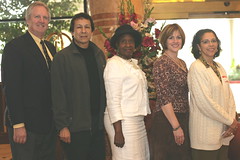
Photo Caption: Pictured at the Tools for Transformation event are (from left): Glen Peterson, Tools for Transformation Manager for World Vision Southern California; Michael Mata, World Vision’s national director for Tools for Transformation; Ruthie Gray, executive director of United Women in Transition; Kimberly Gunderson, executive director for Pomoma New Community; and Jo Carcedo Southern California Metro Director for World Vision US.
Your ideas matter here! Please leave a comment.
February 10, 2007 – Los Angeles, CA – Nearly 50 leaders of South Los Angeles and Pomona community-based organizations today joined together at World Vision’s “Tools for Transformation” training event to celebrate and share plans on transforming their communities. World Vision designed Tools for Transformation to assist grassroots organizations in strengthening their capacity to enable children, families and communities move toward the fullness of life with dignity, justice, peace and hope.
Through Tools for Transformation, World Vision provided a 15-week training program for 40 community-based organizations serving Pomona and the South Los Angeles neighborhoods of South Central, Baldwin Hills, Crenshaw, Leimert Park, Hyde Park and Windsor Hills. The training program equips local leaders and faith-based organizations with the skills and strategies necessary to mobilize resources and achieve their vision of transforming their communities. As a result of the training program, these organizations will be better able to foster a vibrant and vital community that cares for and engages youth, families and their neighborhoods.
“Simply put, if you want to have the maximum impact on individuals, you must do more than give them supplies and services,” says Michael Mata, World Vision’s National Director for Tools for Transformation. “Their environment needs to change to one where everyone in a given community can thrive, not just get by.”
World Vision Los Angeles recently received a Compassion Capital Fund Grant as part of President George Bush’s faith-based initiative. In collaboration with the Department of Health & Human Services Compassion Capital Fund project, World Vision Los Angeles awarded $300,000 to 27 of these community-based organizations that presented effective capacity building plans through a competitive application process.
One of those grantees is United Women in Transition, a South Los Angeles transitional home for women overcoming drug addiction. “The training program was quite valuable to our organization,” says Ruthie Gray, executive director of United Women in Transition. “It gave us the real support we needed.”
Kimberly Gunderson, who heads Pomoma New Community, another grantee that provides an after-school program for at-risk youth, also recognized the training program’s important value. “Even though our workers had passion and zeal, we were a fledgling organization because we didn’t have the best structure,” says Gunderson. “But the training program taught us how to be a sustainable organization so we could build an infrastructure that would grow.”
Mata points out that Tools for Transformation was formed based on WorldVision’s insight into the power of community building. “We have come to a holistic understanding that we can’t do it all,” he says. “It would be better to help develop the community’s capacity to create a better or more dynamic environment, and for them to define what that is.”
Founded in 1950, World Vision Inc. is a Christian relief and development organization dedicated to helping children and their communities worldwide reach their full potential by tackling the causes of poverty. Domestically, World Vision currently works in 12 geographies in the United States in collaboration with thousands of local faith and community-based organizations and networks.
Photo Caption: Pictured at the Tools for Transformation event are (from left): Glen Peterson, Tools for Transformation Manager for World Vision Southern California; Michael Mata, World Vision’s national director for Tools for Transformation; Ruthie Gray, executive director of United Women in Transition; Kimberly Gunderson, executive director for Pomoma New Community; and Jo Carcedo Southern California Metro Director for World Vision US.
Your ideas matter here! Please leave a comment.
11 February 2007
Tools For Transformation
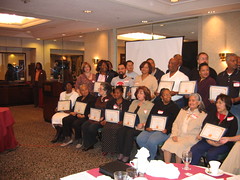
Welcome back! A group of 27 organizations graduated from the Tools for Transformation project funded by the Department of Health and Human Services' Compassion Capital Fund at World Vision.
Your ideas matter here! Please leave a comment.
Your ideas matter here! Please leave a comment.
10 February 2007
These are the great people of the Tools group wrapping up their projects February 28
Welcome back!
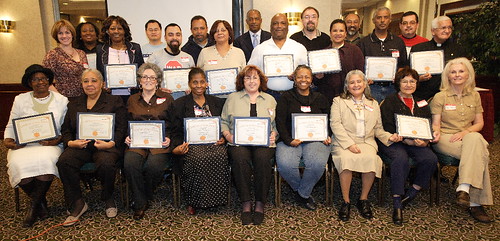
At least they are the ones who were at our final event on Saturday, February 10, 2007
Your ideas matter here! Please leave a comment.
At least they are the ones who were at our final event on Saturday, February 10, 2007
Your ideas matter here! Please leave a comment.
09 February 2007
National Responsible Fatherhood
Welcome back!
Capacity Building Initiative. Click for more information.
Your ideas matter here! Please leave a comment.
Capacity Building Initiative. Click for more information.
Your ideas matter here! Please leave a comment.
08 February 2007
Subscribe to:
Posts (Atom)